


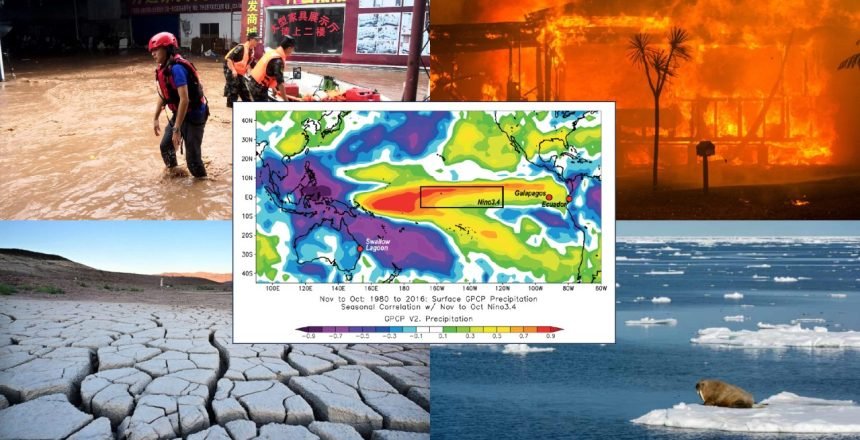
After three years of cooling in the Pacific Ocean and the presence of one of the longest El Niño-Southern Oscillation (ENSO) phases in the last 15 years, in February 2023 meteorological experts confirmed the end of La Niña and warned of the possible formation of El Niño towards the middle and end of this year.

https://www.bbc.com/news/science-environment-64950045
Since April, the warm phase of the ENSO climate pattern has been present , and the various predictive models agree that the probability of this event remaining is greater than 90% for the period from June 2023 to March 2024.


Analyses from the beginning of June indicate that there is an 84% probability that the El Niño phenomenon will have at least a moderate intensity , and a 56% probability that it will become strong.
https://www.weather.gov/news/230706-ElNino
But what does this mean for the energy industry in our region, and in particular, in Panama? What can we do to strengthen our energy resilience and mitigate its potential impacts?
Before answering these questions, let’s first review some fundamental concepts about this recurring climate pattern:
What is ENSO?
The El Niño-Southern Oscillation (ENSO) is one of the most important and studied climatic phenomena on the planet due to its ability to modify global atmospheric circulation, causing large-scale changes in sea level pressures, sea surface temperatures (SST), precipitation, and winds, not only in the tropics but in many other regions of the world.

ENSO is a global cyclical climate pattern observed in the tropical (equatorial) Pacific Ocean. Although ENSO is a single climate phenomenon, it has three states or phases that can last between 2 and 7 years: El Niño, La Niña, and ENSO-Neutral. El Niño is characterized by warming in the central and eastern tropical Pacific Ocean, while La Niña is characterized by cooling in the same region. The ENSO-Neutral phase occurs when neither El Niño nor La Niña is present, and temperatures approach average.
ENSO is not just an ocean phenomenon, but a complex interaction between the ocean and the atmosphere in the tropical Pacific. Through ENSO, scientists can detect climate trends, making it a valuable seasonal forecasting tool. This information can be used to help people prepare for potential weather events, such as floods, droughts, and hurricanes.
How is ENSO monitored?
International meteorological agencies use several indicators to determine the presence of the different phases of ENSO. The main indicators include:
- Sea surface temperature (SST): The most widely used indicator of El Niño is the Oceanic Niño Index (ONI), which measures the average SST in the Niño 3.4 region, an area of the central and eastern tropical Pacific.
- Winds: This refers to changes in winds over the tropical Pacific Ocean. NOAA monitors winds in the tropical Pacific Ocean using the Southern Oscillation Index (SOI). The SOI is a measure of the pressure difference between Tahiti and Darwin, Australia.
- Clouds and precipitation: This refers to changes in clouds and precipitation patterns that are monitored using satellite data.
The Niño regions, also known as Niño 1+2, Niño 3, Niño 3.4, and Niño 4, are specific areas in the tropical Pacific Ocean that have been selected by the scientific community for monitoring and surveillance of ENSO. These regions are crucial for tracking this climate pattern for the following reasons:
- Influence on atmospheric circulation: The anomalous warming or cooling of ocean waters in El Niño regions has a direct impact on global atmospheric circulation. These changes in ocean temperature affect the formation of atmospheric pressure and wind patterns, which in turn affect rainfall and temperature patterns in different parts of the world.
- Relationship to Niño Indices: Niño indices, such as the Southern Oscillation Index (SOI) and the Sea Surface Temperature (SST) Index, are calculated using data from Niño regions. These indices provide quantitative measures of the state and intensity of ENSO and are widely used by scientists and meteorologists to monitor and forecast climate changes due to El Niño and La Niña.
- Historical data and comparability: Niño regions have been defined and used for decades to study ENSO. This has allowed for the collection of historical data and the creation of long-term climate records. By consistently monitoring sea surface temperatures in these regions, comparative analysis can be performed to assess how ENSO events develop over time.
In summary, these regions provide crucial information for understanding and forecasting climate changes associated with El Niño and La Niña.

The Niño 1+2 region is located in the central and eastern Pacific Ocean, and is the most important for monitoring ENSO because it is the region where the warmest water is found during El Niño episodes.
The Niño 3.4 region is located within the Niño 3 and 4 regions, and is used to calculate the El Niño Oceanic Index (ONI), which is the most widely used measure of ENSO.
The Niño 4 region is located in the western Pacific Ocean, and is the least important for ENSO monitoring of all regions, as this region does not show as much variability in SST as the others.
What criteria are used to declare ENSO phases?
Different international meteorological agencies use slightly different criteria to declare the presence of the various phases of ENSO. The following table summarizes the main criteria used by these agencies:

How can these phases be categorized?
The phases can be classified according to their intensity into four categories: weak, moderate, strong, and very strong:
Weak
- Warming/Cooling of the central and eastern tropical Pacific Ocean of 5-8 degrees Celsius above/below the average.
- It usually lasts from 3 to 6 months.
- It may cause some changes in weather patterns, but it is not usually very disruptive.
Moderate
- Warming/Cooling of the central and eastern tropical Pacific of 9-11 degrees Celsius above/below the average.
- It usually lasts 6 to 9 months.
- It can cause more significant changes in weather patterns, such as increased rainfall in some areas and decreased rainfall in others.
Strong
- Warming/Cooling of the central and eastern tropical Pacific Ocean of 12-14 degrees Celsius or more above/below the average.
- It usually lasts between 9 and 12 months.
- It can cause widespread disruptions to weather patterns, such as droughts, floods, and changes in tropical cyclone activity.
Very strong
- Warming/Cooling of the central and eastern tropical Pacific Ocean of 14 degrees Celsius or more above/below the average.
- It usually lasts 12 months or more.
- It can cause severe and widespread disruptions to weather patterns, such as droughts, floods, and changes in tropical cyclone activity.
It’s important to note that ENSO can only explain less than 30% of climate due to the complexity of climate processes. Here are some reasons why this is:
- Multifactorial nature of climate: Climate is the result of the interaction of multiple factors, including solar radiation, atmospheric circulation patterns, high and low pressure systems, ocean currents, temperature gradients, and others. ENSO is only one of these factors and cannot explain all observed climate variations.
- Other modes of climate variability: In addition to ENSO, other modes of climate variability exist at different time scales, such as the North Atlantic Oscillation (NAO), the South Atlantic Oscillation (SAO), and the Arctic Oscillation (AO). These modes of variability also contribute to climate variation and can interact with ENSO in complex ways.
- Regional and local factors: Climate is also influenced by regional and local factors, such as topography, proximity to oceans, vegetation, and land cover, which can modify the effects of ENSO. These factors can vary in different regions and have a significant impact on local climate.
- Nonlinear interactions and delayed effects: The interactions between the different components of the climate system are complex and nonlinear. The effects of ENSO may not be immediate, and there may be delays in their propagation through the atmosphere and oceans. Furthermore, the effects of ENSO can vary in intensity and duration from one event to another, making it difficult to fully explain climate variability.
- Influence of other external forcings: In addition to internal climate system factors, external forcings also influence climate, such as greenhouse gas concentrations, aerosol emissions, and variations in solar radiation. These forcings can interact with ENSO and further affect climate variability.
It is important to understand that ENSO is a natural climate pattern that does not directly cause any weather events. However, it can influence the likelihood of certain events occurring, such as droughts, floods, tropical cyclones, changes in agricultural yields, fish populations, and sea levels.
Through the study, scientists have been able to identify some seasonal patterns that remain constant in certain regions, especially those associated with climatic variables such as rainfall and hurricane season. The following shows how the different phases of ENSO can affect these variables.
How do El Niño and La Niña influence rainfall?
The rainfall pattern remains constant in the regions and seasons indicated on the map. During El Niño events, warmer water pushes strong air currents south and east. This brings wetter weather to the southern U.S. states and the Gulf of Mexico, while Central and South America remain drier, as do Asia, Australia, and central and southern Africa. The opposite occurs during La Niña events.


How do El Niño and La Niña influence hurricane season?
ENSO conditions affect the frequency, intensity, and location of tropical cyclones. During El Niño, more hurricanes form in the Pacific but fewer tropical storms form in the Atlantic. The opposite occurs during La Niña events.


What to expect during the El Niño phase?
El Niño is a phase of ENSO that originates from the weakening of the trade winds, which normally blow from east to west across the Pacific Ocean. When the trade winds weaken, warm water from the western Pacific Ocean can flow eastward toward the South American coast.
Although El Niño is a natural climate pattern, it has been exacerbated by climate change. Climate change is causing the Earth’s atmosphere to warm, making El Niño events more frequent and intense.
Effects of El Niño in Central America and the Caribbean
During the El Niño phase, regions of Central America and the Caribbean may experience certain weather patterns and impacts, although the exact effects may vary.
- Reduction in hurricane activity in the Atlantic: El Niño conditions typically lead to an increase in wind shear in the Atlantic basin, which inhibits the formation and intensification of hurricanes.
- Altered rainfall patterns: El Niño can cause changes in rainfall distribution in the central and Caribbean regions. Some areas may experience below-average rainfall, leading to water scarcity and impacts on agriculture, while other regions may receive above-average rainfall.
- Warmer temperatures: El Niño may contribute to increased temperatures in the central and Caribbean regions.
- Impact on ecosystems: El Niño can affect marine ecosystems, including coral reefs. The elevated sea surface temperatures associated with El Niño can cause coral bleaching, which can be detrimental to the health of coral reefs.
- Sargassum Proliferation: Although the exact link between ENSO and sargassum is still being investigated, certain associations and possible mechanisms of influence have been observed. It is known that rising sea temperatures can favor the development and proliferation of certain sargassum species; likewise, alterations in wind patterns and ocean currents can influence its transport and dispersal in the Caribbean region.
- Sandstorm Formation and Transport of Saharan Dust to the Caribbean: Although the relationship between El Niño and Saharan dust is neither direct nor fully understood, some potential connections have been observed. For example, during El Niño years, some areas of the Sahara may experience more intense and prolonged droughts. The drier Sahara can cause winds to carry more dust toward the Caribbean, potentially increasing the presence of Saharan dust in the region, which can impact air quality and human health.
Effects of El Niño in Panama
The El Niño phase could affect the climate in Panama in the following ways:
- Increased rainfall is expected from the central to the eastern parts of the country. This could lead to flooding and landslides, especially in areas already prone to these hazards.
- Decreased rainfall in the Panama Canal watershed may result in lower water levels in Gatun Lake, an essential part of the lock system that provides the water needed to operate the canal. These lower water levels could affect the navigability of large vessels and necessitate traffic restrictions.
- Decreased rainfall in the west of the country. This can lead to droughts that damage crops and the water supply.
- Changes in the timing and intensity of the rainy season. The dry season in Panama typically runs from December to April, but during El Niño it can start earlier or last longer. The rainy season can also be more intense, which can lead to flooding and landslides. For example, in 2023 there were no cold fronts during the dry season; and the start of the 2023 rainy season was delayed until the end of May, resulting in an abnormally long dry season of about six months.
- Increased risk of tropical hurricanes in the Pacific. During El Niño, a decrease in storm and hurricane formation is expected in the Atlantic, while in the eastern Pacific, including the Gulf of Panama, there could be an increase in cyclonic activity. This means that Panama could be affected by a greater number of storms and hurricanes during hurricane season.
Effects of El Niño in other parts of the world
In the United States, El Niño can cause:
- Increased rainfall and flooding in the southwestern United States and southern California.
- Drought in the southeastern United States and the Midwest.
- Warmer and drier winters in the Pacific Northwest.
- Colder and wetter winters in the northeast.
El Niño can also have a significant impact on the climate in other parts of the world, including:
- Australia: Increased rainfall and flooding
- Southeast Asia: Drought
- Africa: Drought
- Europe: Drier and colder winters in the north and wetter winters in the south, increasing the risk of forest fires and floods across the continent, as well as a decrease in agricultural yields.
Impact of El Niño on the Energy Resilience of the Central American Region
The El Niño phase has a direct impact on the region’s energy industry due to its heavy reliance on hydroelectric power generation. During El Niño events, a significant decrease in rainfall is observed, resulting in reduced water levels in reservoirs and rivers, jeopardizing the supply of electricity to meet demand.
Additionally, during El Niño events, high temperatures and adverse weather conditions typically increase the demand for energy for cooling and air conditioning . Likewise, the extreme weather conditions associated with El Niño, such as droughts, floods, and severe storms, can damage infrastructure used for electricity transmission, such as transmission lines and substations.
Finally, El Niño can also affect maritime conditions and, therefore, the transport of fuels , such as oil and natural gas, in a region heavily dependent on fuel exports.
How can the effects of El Niño be mitigated in our countries?
Some mitigation strategies could include:
- Diversification of the energy mix: Countries must reduce their dependence on a single energy source, especially if it is climate-dependent, such as hydroelectric power. Diversification towards renewable sources, such as solar and wind power, can help ensure a more stable and resilient energy supply.
- Improved water management: Since El Niño can trigger droughts or floods, it is essential to improve water management in affected countries. This involves implementing water conservation and efficiency measures, as well as developing more resilient water storage and distribution systems. Proper water resource management will ensure water availability for hydroelectric power generation and other important uses during periods of drought.
- Promoting energy efficiency: Energy efficiency plays a fundamental role in energy resilience. By reducing energy consumption, countries can mitigate pressure on energy resources and decrease their vulnerability to climate change. Implementing energy efficiency policies and programs in key sectors, such as industry and buildings, can contribute to greater energy resilience and sustainability. In this regard, education and public awareness are also essential to promote conservation practices and the responsible use of water and energy.
- Strengthening Infrastructure : Investing in robust and resilient energy infrastructure is essential. This includes improving transmission and distribution infrastructure, as well as implementing efficient energy storage systems. Energy storage capacity helps mitigate the impacts of fluctuations in renewable generation and ensures a constant supply during extreme events such as El Niño.
- Disaster planning and response : It is important to develop disaster response plans that include specific measures to address extreme weather events, such as droughts, floods, and storms. This may include creating early warning systems, improving flood protection infrastructure, and implementing emergency response strategies.
- Strengthening Regional Cooperation: The El Niño phenomenon is a challenge that transcends national borders. Countries must promote regional cooperation to share information, best practices, and resources for energy management during extreme weather events. The exchange of knowledge and experiences can help identify innovative solutions and strengthen energy resilience throughout the region. Furthermore, in extreme situations, it becomes even more crucial that countries faithfully adhere to the conditions agreed upon in the Framework Treaty governing the integration of electricity markets. Only through reciprocal and non-discriminatory treatment will we strengthen cooperation and become a more resilient region.
A summary of this article was published in AmCham News on June 10, 2023.