

From Vertically Integrated Industries to Competitive Markets
Over the past forty years, Central American countries have undergone a remarkable transformation in their electricity industries. They have evolved from vertically integrated and centralized models, where the state controlled the allocation of resources across the various activities of the electricity value chain, including pricing, toward more autonomous and competitive management models. These changes have been made possible by the implementation of reform processes in most countries of the region.
To date, all Central American countries have introduced some form of electricity sector reform , ranging from the authorization of some Independent Power Producers (IPPs) to full retail competition; and three of them, Guatemala, Panama and El Salvador, have introduced long-term energy and power supply auctions.
Regardless of the country and the model adopted, these changes have facilitated the introduction of regulatory, financing, and market mechanisms to set energy prices, promote the participation of private actors, and, in some cases, incorporate new technologies into the electricity chain. This has allowed the electricity service in Central American countries to show substantial progress , which is reflected not only in the region’s socioeconomic development but also in government efforts to improve the service.
Although the characteristics of electricity service in the region vary according to individual socioeconomic development and the functional structure of their electricity markets, all countries have made significant progress overall. However, these achievements appear to have been concentrated in the liberalized segments of the supply chain, with only partial progress in network activities, governance, and the consolidation of regional integration.
While it is true that the implementation of the SIEPAC infrastructure and the Regional Electricity Market (MER) has led to a continuous increase in exchanges between MER participants year after year , and has seen growth in the number of generating, marketing, distribution, and large-scale consumer companies now participating in the market (exceeding 250 participants), it is equally true that further regional integration is needed for the economic benefits derived from the MER to reach their expected objectives and benefit the majority of consumers in the region.
Sustainable Development and Energy Matrix
Between 1990 and 1995, the average annual growth in electricity demand in the region was around 7%. This growth subsequently slowed to 3.4% between 2009 and 2010. Only Panama showed an skewed trend, maintaining levels similar to those of 1990 throughout that decade. According to projections from the Central American Electrification Council (CEAC), average demand growth for Central America will be between 4% and 6% annually until 2025, which implies that the region will need to double its electricity generation capacity in the coming years.
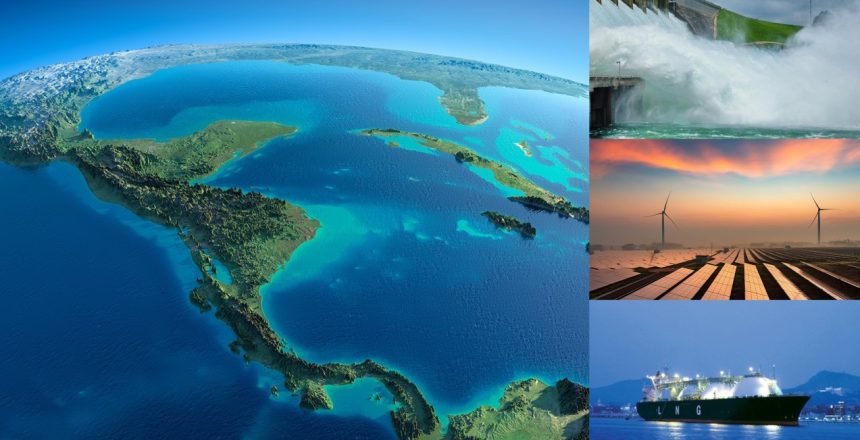
It is estimated that 75% of the region’s electricity is generated from renewable sources , with 74% coming from hydroelectric generation, 16% from intermittent renewable generation (from wind and solar photovoltaic plants), and 10% from geothermal generation. The additional 25% of energy required to meet demand comes from thermoelectric plants (23%), and 2% is imported from the Mexican system via the interconnection with Guatemala. Central America contributes only 0.17% of global greenhouse gas emissions, making it the region with the lowest global contribution.

Following global trends of the last decade, non-conventional renewable energies, such as wind and solar, have been gaining ground in the region. Costa Rica and Panama stand out as leaders in the use of renewable energies, achieving on several occasions long periods of the year (between 3 and 4 months) with 100% renewable electricity supply, through the combination of hydroelectric, geothermal, wind, biomass, and solar production.
Although hydroelectric power has been the region’s preferred energy source and is considered the best option for future expansion because its potential has not yet been fully exploited and its carbon footprint is relatively low, this type of renewable energy has not been without its development challenges.
- The construction of large reservoirs has generated conflicts, including violent ones, with local communities in the past due to displacement and the unequal distribution of water resources between countries. This has been partially mitigated by the development of projects such as SIEPAC and MER. Additionally, reservoirs tend to emit methane in their initial phases due to the decomposition of organic matter following flooding.
- Due to past conflicts, international banks are less willing to finance hydroelectric megaprojects involving large reservoirs, and Central America does not have its own economic resources to finance them.
Geothermal energy, present in the region for 30 years and used by Guatemala, El Salvador, Nicaragua and Costa Rica, with remaining potential to be exploited, faces particular difficulties for its development because the deposits to be exploited are located within protected wilderness areas that require additional studies to rule out ecological impact, as well as modifications to the current regulations for its installation within a national park.
On the other hand, biomass, another resource used in the region through cogeneration processes of steam and electricity in sugar mills by burning sugarcane bagasse during the harvest season (between six and seven months a year in the dry season) and feeding its surplus electricity into the distribution grid, does not have sufficient potential to significantly contribute to the energy requirements of future society. At the regional level, biomass produces only 3.9% of total electricity, although it has been particularly important in Guatemala and Nicaragua, where it has supplied up to 10% of the country’s electricity.
Although the region has invested in renewable energy sources, this does not mean that fossil fuels have disappeared from its electricity mix. Central America does not have significant oil reserves, so it must import this resource for electricity generation and transportation. According to ECLAC and GIZ, these imports consume 12% of the region’s Gross Domestic Product (GDP).
Over the past decade, liquefied natural gas (LNG) has been gaining traction in the region as a new, low-emission energy source, promising to provide the firm baseload power the region needs to meet its growth and energy transformation plans. This fuel has already allowed for the replacement of oil in electricity generation in Panama and El Salvador, and is seen as the alternative that will enable the closure of the few remaining power plants that still use coal and petroleum-derived fuels.
Sustainable and Just Energy Transition
The Central American region has all the conditions to become a global renewable energy hub with great potential in green hydrogen , since its electricity grids are relatively clean and/or are on an advanced path towards decarbonization.
Despite positive indicators regarding the composition of energy mixes, significant disparities in energy access exist in the region. These disparities are primarily observed among vulnerable populations in marginalized urban and rural areas. In countries like Honduras, Guatemala, and Nicaragua, less than 50% of the population has access to quality energy that does not compromise their health, mainly due to the exposure of children and women to high levels of air pollution caused by biomass burning for cooking.
Women, being primarily responsible for domestic and caregiving activities, suffer the most from the implications of energy poverty. These deprivations translate into a lack of time and energy to access education and join the workforce, where they could generate their own income.
Currently, there are no disaggregated indicators that allow us to understand the gender gap in energy access, despite some national surveys that include data on household income and expenditure, as well as time allocation. This highlights the need to incorporate gender indicators into public policies aimed at the energy sector, since, ultimately, access to energy should provide efficiency, equity, and empowerment for the entire population.
Since the mid-2010s, some models have begun to incorporate a vision of a sustainable and just energy transition. However, energy policy decisions that will outlast political changes remain a question mark and a source of uncertainty in the region.
Trends and Challenges of the Transition for the Industry
The energy transition represents a significant challenge for Central America’s electricity industry , but it also opens a world of opportunities to transform the sector toward an even more sustainable and resilient energy mix. Taking into account the latest industry trends, the main challenges that can be identified are:
Modernizing Regulatory Frameworks: Undertaking a comprehensive reform of existing regulatory frameworks is essential to accelerate investment and the integration of technology and innovation at all stages of the electricity value chain. Modernizing infrastructure, adopting advanced technological solutions, and optimizing processes are key aspects for improving the efficiency and reliability of the electricity system.
Deepening Regional Electrical Integration: Collaboration among countries to establish interconnections and share energy resources is essential for more efficient management and greater resilience to industry contingencies. Greater regional electrical integration will not only reduce costs but also allow for better use of available energy resources, thus facilitating the transition to a more sustainable and diversified energy mix in the region. To achieve this, it will be necessary to:
- Strengthen political will, enhance inter-institutional cooperation, and facilitate regional electricity planning.
- To deepen the understanding and dissemination of the Regional Regulation.
- Improve the monitoring and evaluation tools for the MER’s performance.
- Review the Sanctioning Regime.
- Ensure the expansion of countries’ internal transmission systems so that they do not become a bottleneck for transactions in the Regional Market. “Without transmission, there is no transition.”
- Design and implement firm long-term transmission rights. To address this situation, it will be essential to adjust national regulations and implement long-term regional electricity procurement. This will require not only designing and implementing firm long-term transmission rights, but also establishing appropriate decision-making, bidding, and contracting processes for future regional electricity procurement.
- Promote the development of infrastructure and regulatory instruments that favor the operational coordination of the MER with the markets of Mexico, Colombia and the rest of Latin America.
- Implementation of a regional market for compensation and ancillary services, to share operating reserves and non-energy services
Integration of Distributed Energy Resources: Solar and wind power generation (onshore and offshore), along with energy storage systems and electric vehicles, offer a unique opportunity to diversify the energy mix and reduce emissions. However, their integration will require proper planning and regulation. Incentives for investment in these technologies and the promotion of smart infrastructure will be key to optimizing energy use and increasing the penetration of intermittent renewable sources. Likewise, it will be necessary to develop and implement significant improvements in the monitoring and oversight mechanisms of transmission and distribution systems to facilitate the integration of distributed technologies and leverage innovations in flexibility.
Data Collection, Sharing, and Protection: Data availability and quality are crucial for implementing digital solutions in the electricity industry. Currently, a lack of data sharing among market participants, outdated systems, and incompatible formats hinder resource planning and optimization. Overcoming these obstacles and ensuring data availability and quality will be fundamental to boosting efficiency and competitiveness in the electricity sector. This will be key to the transition toward integrating distributed energy resources and the emergence of new players in the electricity market.
Reducing Technical and Non-Technical Losses in the Grid: Implementing digital technologies to address technical and non-technical losses in the system is essential for reducing emissions and improving efficiency. Some countries still face high levels of losses and/or frequent and total power outages (Honduras and Nicaragua) due to poor infrastructure and billing problems. Investment in modern infrastructure and adequate monitoring systems will be crucial to overcoming this challenge. (Technical losses are due to poor infrastructure and grid congestion, while non-technical losses are due to electricity theft or inadequate billing systems.)
In conclusion
With these transformations and challenges, Central America finds itself at a crucial juncture for advancing toward a sustainable and equitable energy transition. The integration of renewable technologies, the modernization of infrastructure, and the promotion of regional collaboration are fundamental factors for achieving a more diversified and sustainable energy mix.
To overcome the identified challenges, coordinated action is required among governments, the private sector, and civil society. Only through a comprehensive and collaborative approach can Central America take full advantage of the opportunities offered by the energy transition and build a more sustainable future for all citizens of the region.
- The Central American Region, also known as Central America or the Central American Isthmus, comprises the territory located between Guatemala and Panama. Although geographically the isthmus is shared by seven countries—Belize, Guatemala, Honduras, El Salvador, Nicaragua, Costa Rica, and Panama—only six are integrated and interconnected through the Central American Electrical Interconnection System (SIEPAC) and the Regional Electricity Market (MER).
- The process of electrical integration in Central America has been a joint effort of the countries of the region over several decades, going through electrical reforms and binational interconnections, and culminating with international agreements (Framework Treaty, First and Second Protocol), the SIEPAC Project, Regional Regulation and the creation of the MER, a supranational wholesale market that serves as a basis for investment and efficient operation of national and regional systems.
- Despite efforts to improve industry efficiency, the level of total losses has been a persistent challenge. In 1975, they represented 11.2% of the energy available regionally, and by the mid-1990s, they had increased rapidly to nearly 18%, remaining at that level ever since. Some countries, such as Honduras, Nicaragua, and Guatemala, still experience a significant deterioration in the level of losses, hovering around 35%, 25%, and 15%, respectively, due to technical and non-technical losses.