


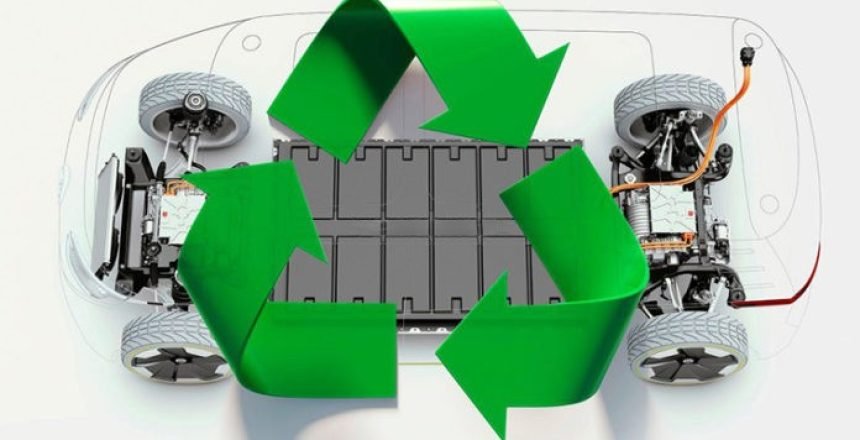
The adoption of electric vehicles (EVs) is playing a key role in decarbonizing the transport sector , especially in the light commercial vehicle segment. Despite requiring fewer raw materials and having a smaller overall carbon footprint compared to combustion engine vehicles, their anticipated widespread adoption is driving the need to address the challenges of the circular economy in this rapidly developing industry.

While EVs offer significant advantages in terms of reducing emissions and dependence on fossil fuels, they also present challenges in relation to the sustainability of their components (electronics, plastics and textiles) and batteries.
An electric vehicle contains up to four times more copper than a combustion engine vehicle. Electric batteries are made of metals and minerals such as lithium, cobalt, manganese, graphene, silicon, copper, nickel, and aluminum.
One of the main challenges of a circular economy for electric vehicles is the proper management of batteries . The lithium-ion batteries used in EVs contain valuable materials, such as lithium, cobalt, and nickel. However, they also contain potentially toxic and polluting materials that require proper management at the end of their useful life. To achieve an effective circular economy, it is essential to develop efficient recycling and reuse systems for these batteries.
Recycling EV batteries is a complex process due to the diversity of designs and chemistries used. Furthermore, the logistics and infrastructure required to collect, transport, and recycle these batteries need to be developed and optimized. While there have been significant advances in battery recycling technology, challenges remain in terms of cost, efficiency, and the need for clear regulations and standards.
- The recycling technology known as “Black Mass” is making it possible to recover valuable metals from the black mass produced when lithium-ion batteries are recycled. This black mass is a mixture of metals, such as lithium, cobalt, nickel, and manganese, that remains after the batteries are disassembled and the electrolyte is removed.
- The black mass recycling process is a relatively new technology, but it has the potential to be a key tool in recovering valuable metals from batteries. However, this technology also presents some challenges, such as: (1) The process can be energy-intensive; (2) The process can produce hazardous waste.
- Currently there are several plants of this type in the world, the main ones being located in the United States, Canada, China and the European Union.
- In March 2023, the Panamanian government announced the signing of a memorandum of understanding with American Manganese Inc. to develop a black mass recycling plant in the Panama Canal Zone . The plant is estimated to have a capacity of 1,000 tons per year and be operational by 2024. The technology to be used is said to be capable of recovering 99% of the valuable metals from batteries, including lithium, cobalt, nickel, and manganese.
Another major challenge is the design of the electric vehicles themselves. To foster a circular economy, EVs must be designed with ease of repair, access to spare parts, and the ability to upgrade and refurbish components in mind. This will require a design approach focused on durability, modularity, and disassembly, which will extend their lifespan and reduce waste generation.
In addition to the technical challenges, it is also necessary to address the economic and regulatory aspects to promote a circular economy in electric vehicles . This involves establishing incentives and policies that encourage the adoption of sustainable practices, such as deposit and reward schemes for used batteries, extended producer responsibility agreements, and the promotion of standards and certifications that guarantee traceability and proper management of materials.
Despite the challenges, it is important to highlight that the circular economy in electric vehicles also presents significant opportunities. Recovering and reusing valuable materials from batteries and other components can reduce reliance on natural resource extraction (“urban mining”), lower production costs, and promote a more sustainable vehicle lifecycle.
The Circular Economy and Industry 4.0 in the Automotive Sector
In recent years, the automotive sector has been implementing improved practices for reuse, exchange, repair, remanufacturing, and recycling that involve entire value chains . These practices are benefiting from Industry 4.0 technologies and today’s hyperconnected environment, which enable greater efficiency and transparency in the supply chain.
Through the use of supply chain monitoring and traceability technologies such as sensors, IIoT, and blockchain, the exact origin of the materials used is being certified, ensuring that they are ethically sourced. This also facilitates greater transparency throughout the supply chain, allowing manufacturers and urban miners to set the standard for labor practices they expect their suppliers to follow.
Advances in material sorting technology such as Artificial Intelligence are enabling the reuse of waste more effectively and efficiently, allowing for a reduction in the cost of recycled material compared to virgin materials, without compromising quality.
Through the use of advanced data analytics, machine learning, and management systems , the aim is to extend the lifespan of vehicles and their main components. Predictive maintenance is expected to generate significant cost savings.
The use of “Digital Twin” technology is accelerating the development process for electric vehicles, allowing manufacturers to validate components and architectural options by acting on data captured from a virtual model. This is helping to optimize vehicle engineering and minimize waste generation and energy consumption in the manufacturing process.
Case Study: Renault Group
The Renault Group has been a leader in implementing the circular economy in the automotive industry . For over 30 years, Renault has equipped its vehicles with recycled plastics and reused and refurbished used mechanical parts for sale at significant discounts of up to 40% off their new price. This has allowed them to save up to 80% on water, energy, and chemical consumption, reducing their raw material requirements and environmental impact.
For over 10 years, its “Renault Environment” division has been dedicated to implementing circular economy procedures , giving a second life to parts and materials collected from end-of-life vehicles. This circular economy model is becoming a benchmark in the automotive industry.
In the case of Renault, four fundamental elements stand out in its circular economy model:

- First, there is the reuse and reconditioning of parts , driven by INDRA, France’s leading automotive recycler, in which Renault holds a 50% stake. This system allows Renault’s after-sales network to access an online catalog of hundreds of thousands of parts ready for reuse, enabling quality repairs at reduced costs and with a low environmental impact. In the case of batteries, defective or damaged ones are sent to the factory, repaired, and then stored to supply the after-sales network.
- Secondly, Renault is committed to the shared electric vehicle model through its subsidiaries Renault Mobility and Zity. Self-service car sharing optimizes vehicle utilization rates and provides users with a flexible and affordable way to travel, helping to reduce road congestion and improve air quality. Currently, the group’s electric vehicles are the most widespread in Europe, with a fleet of over 8,000 shared cars on the road, most of which are ZOE models.
- Third, Renault is looking to give a second life to used electric vehicle batteries. Batteries whose charging capacity has become too low for automotive use can be repurposed in mobile applications or energy storage systems, extending their useful life for approximately 10 additional years. Carwatt uses these batteries to convert combustion engine vehicles (mostly industrial equipment such as airport baggage carts) into electric vehicles.
- Fourth, Renault focuses on materials recycling. Materials from end-of-life vehicles are recycled and incorporated into the production of new vehicles (closed loop) or into other industries (open loop). Renault uses recycled materials from other industries in the production of new vehicles and has developed partnerships for the recycling of polypropylene and copper, among other relevant materials.
For example, Renault, through its subsidiary Gaïa, uses the INDRA network to recover materials such as bumpers from scrapped vehicles. These are ground into granules and used to produce new parts (such as interior trim or exterior accessories) for combustion engines or electric vehicles. Furthermore, Renault has collaborated with partners like Les Filatures du Parc and Adient Fabrics France to develop an innovative fabric made entirely from recycled materials , which is used in the manufacture of vehicles like the New ZOE. This closed-loop manufacturing process has a carbon footprint 60% lower than the standard manufacturing process. Each New ZOE contains 22.5 kg of recycled plastic.
Renault is also committed to recycling factory waste , such as canvas scraps, which are recovered to manufacture seat belts. In addition, the company recycles copper from the electrical wiring of scrapped vehicles, using some of it in the production of new parts and sending the rest to copper foundries for use in the automotive industry and other purposes.
In the case of electric vehicle batteries, Renault is involved in a recycling process in which more than 60% of its materials are collected and reused. More than 80% of elements such as cobalt, copper, and nickel present in these batteries are recycled.
As part of its commitment to the circular economy, Renault also carries out research programs with the aim of implementing closed-loop recycling of copper extracted from electric motors and critical battery components.
hashtag#electromobility hashtag#circulareconomy hashtag#netzerotransition hashtag#technology hashtag#innovation hashtag# transport hashtag#future hashtag# sustainability hashtag#emobility hashtag#evehicles hashtag#electricvehicles hashtag#linkedinbyjuliodiazcohen