

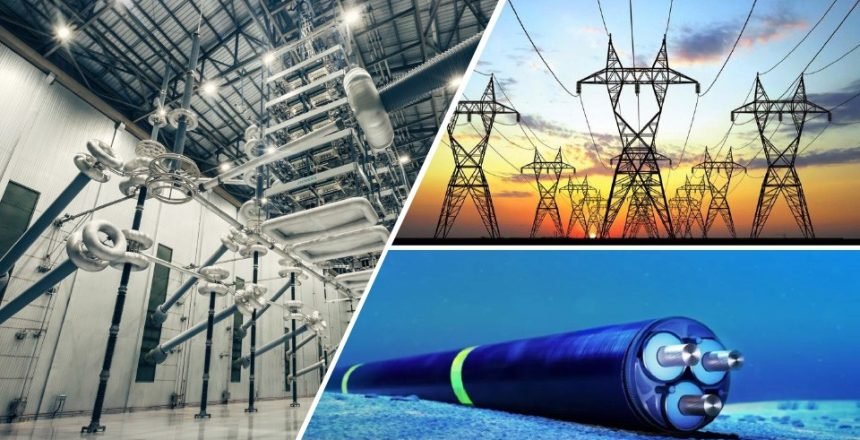
Cross-border electricity interconnections represent a unique opportunity for Latin America and the Caribbean (LAC) on its path toward energy transition and sustainable economic development. By leveraging the region’s diverse energy resources and strengthening regional cooperation, these projects can transform the energy mix, reduce carbon emissions, and improve the energy security of the interconnected countries.
Latin America and the Caribbean (LAC) possesses great geographical and climatic diversity, giving it exceptional potential for renewable energy generation. However, the ability to fully leverage this advantage is limited by a lack of adequate transmission infrastructure and the fragmentation of energy systems in the region . In this regard, cross-border electricity interconnections can become a powerful tool to overcome these obstacles and move towards a cleaner and more diversified energy mix.
Electrical interconnections allow electrical systems to expand from local and isolated systems to interconnected systems, to national systems, and finally to supranational or regional systems. As the level of interconnection increases, the size of the relevant market grows, generating a series of advantages in the connected areas and opening the possibility of creating regional electricity markets. It is well known that an electrical system is stronger and more secure the larger it is and the better interconnected it is.

Physical Interconnection between Systems
Due to the unique nature of electrical systems and the physical interconnections between them, they can be classified into two main categories: Synchronous Interconnections and Asynchronous Interconnections. Each of these categories has its own specific characteristics and applications.

Synchronous Interconnections
These interconnections occur in alternating current, so electrical systems are connected in such a way that their generators and loads operate in sync. This means that generators from different systems are coupled in frequency (speed) and phase, allowing for the bidirectional flow of energy in real time.
These interconnections are ideal for connecting geographically close electrical systems, such as states or regions within the same country. These projects are generally feasible for relatively short distances, typically not exceeding 500 km for overhead infrastructure or up to 80 km for submarine or underground cables.
Other advantages of these interconnections include their contribution to the overall stability of the electrical system by providing mutual support during generation outages or disturbances. They also enable the joint optimization of generation resources and can improve the reliability of supply.
One of the best examples of this type of interconnection is the Central American Electrical Interconnection System (SIEPAC). This project connects the electrical systems of several Central American countries, including Costa Rica, El Salvador, Guatemala, Honduras, Nicaragua, and Panama.
Asynchronous Interconnections
These interconnections occur using high-voltage direct current (HVDC), through the use of electronic converters to convert alternating current to direct current and vice versa, thus not requiring the connected systems to operate in sync. This type of technology is more complex and expensive than alternating current transmission.
Asynchronous interconnections are ideal for connecting electrical systems over long distances , whether via submarine or underground cables, as they minimize transmission losses.
They are also useful for connecting systems with different frequencies and operating characteristics. This technology allows network operators to have precise control over energy transfer between systems, which not only improves network stability but also enables a more agile response to fluctuations in energy demand. Another important aspect is that these types of interconnections act as an effective barrier against the propagation of faults in one of the interconnected systems, which has a significant impact on the resilience and integrity of the entire system.
Generally, these projects are feasible for distances greater than 500 km when it comes to aerial infrastructure or 80 km or more when it comes to submarine or underground cables.
Good examples of this type of interconnection can be found throughout Europe, where there are various interconnections that allow the transfer of energy between countries with independent electrical systems.
One such interconnection is the connection between France and the United Kingdom, known as the “France-UK Interconnection” (IFA). This electrical interconnection consists of 270 kV submarine HVDC cables that cross the English Channel.
The appropriate choice between synchronous and asynchronous interconnections depends on a combination of factors, including the geographical distance between systems, the need to share generation resources, the reliability of supply, and other economic considerations.
Benefits of Interconnecting Electrical Systems
The interconnection of electrical systems offers a number of significant benefits that go beyond the simple transfer of energy and have a positive impact on the economy, energy security, and environmental sustainability of the interconnected areas. These key benefits can be grouped into three main categories: Technical, Economic, and Political-Environmental.
Of a Technical Nature
- Improved Frequency and Voltage Stability: Frequency and voltage stability are increased in synchronous interconnection systems, with this improvement being more noticeable in larger electrical systems. However, a challenge arises when interconnecting systems of very different sizes.
- Increased Reliability in Meeting Peak Demand: Interconnection also increases reliability in the ability to meet peak electricity demand.
- Reduces Supply Interruptions: Interconnection helps reduce the hours when no electricity is supplied, resulting in a more reliable service.
- Improved network reliability in border areas: Border areas benefit from increased reliability thanks to dual feeds, and the transport infrastructure is also optimized. While building long-distance transmission infrastructure can be expensive, sharing existing infrastructure through interconnections optimizes resources and reduces investment and operating costs, freeing up funds for other purposes.
- Increases Resilience and Security in the Electrical Grid: HVDC technology prevents a failure in one of the interconnected systems from propagating to the other, significantly improving the resilience and security of the electrical grid.
Of an Economic Nature
- Reduces Operating Reserves: Interconnection capacity reduces the need to maintain large operating reserves, thus optimizing the efficiency of the electrical system.
- Improved Resource Optimization (Generation and Grid ): Interconnection allows for better utilization of generation resources and the electrical grid. Due to differences in customs, schedules, climate, time zones, etc., the availability of generation resources and electricity needs vary between cities, regions, and countries, and these needs do not coincide over time, both at the hourly level of a day and between days of the week and months of the year. This allows for improved efficiency in the management of systems and more optimized processes.
- It facilitates commercial exchanges: Interconnection facilitates the commercial exchange of electricity to take advantage of energy price differences between interconnected electrical systems. It also facilitates the allocation of surplus resources from one system.
- Promotes the Integration of Energy Resources: Interconnected areas can have diverse energy sources available that can be shared, thus promoting the diversification of supply sources and greater penetration of renewable energy.
- Reduces the Need for Installed Power: By sharing resources, the need to invest in greater generation capacity decreases due to the complementarity between systems and the time shift of load curves.
- Reduces Supply Costs (Economies of Scale): Interconnection allows for maximizing economies of scale, which reduces energy supply costs.
- Stimulates Competition: By expanding the relevant market and thus increasing the number of participants in the system, competition is encouraged, which could result in more competitive rates and benefits for consumers.
- Reduce Energy Losses: Interconnection allows for more efficient management of electrical grid losses.
Of a Political and Environmental nature
- Enhances International Cooperation: Interconnecting electrical systems can help promote international cooperation and regional integration. By enabling energy exchange, countries can reduce their dependence on external energy sources and improve their energy security.
- Reduce Greenhouse Gas Emissions: Interconnection facilitates the integration of renewable energy resources, such as solar and wind power, which are cleaner than traditional energy sources. This can help reduce greenhouse gas emissions and combat climate change.
- Improves Environmental Sustainability: Interconnection can help protect the environment by reducing the need to build new generation and transmission infrastructure. This can help conserve natural resources and reduce the environmental impact of energy production.
Main Challenges and Barriers to its Development and Expansion
Despite the clear benefits offered by cross-border electrical interconnections, their development in Latin America and the Caribbean faces a number of challenges and barriers, including:
Coordination and Regulation
Coordination between countries and the harmonization of regulations are crucial for the success of electrical interconnections. The absence of robust agreements can lead to commercial and technical conflicts that hinder the operation of interconnected systems.
To fully realize the potential of electrical interconnections in Latin America and the Caribbean, it is essential that the countries of the region collaborate closely to create robust cooperation agreements. This entails establishing shared regulatory frameworks and joint infrastructure planning.
Financing and Cost Sharing
Building interconnection infrastructure can be costly, and fairly distributing the costs among participating countries presents a significant challenge. To carry out these projects, it is often necessary to secure financing from international investors and multilateral financial institutions.
To foster the development of this essential infrastructure, it is crucial to establish appropriate financial incentives that attract investment in interconnection projects. Governments can explore various strategies, such as providing subsidies, facilitating loans at reduced interest rates, and entering into long-term power purchase agreements, to ensure the economic viability of these initiatives.
Cybersecurity
As electrical grids become more interconnected, the risk of cyberattacks increases. Ensuring the security of electrical interconnections is essential to protecting the integrity of electrical systems and data privacy in an increasingly connected industry. Implementing robust cybersecurity measures and fostering international collaboration in threat detection and mitigation are crucial to addressing this constantly evolving challenge.
Current Status of Electrical Interconnections in the Region

Central America
Central America has experienced significant progress in its energy integration over the past two decades, primarily through the SIEPAC (Central American Electrical Interconnection System) interconnection line. This crucial infrastructure links the electrical systems of six countries: Costa Rica, El Salvador, Guatemala, Honduras, Nicaragua, and Panama, along a 230 kV corridor spanning 1,800 km with a transmission capacity of 300 MW of alternating current. All SIEPAC electrical systems operate at a frequency of 60 Hz.
Currently, it is important to note that Guatemala is also connected to Mexico, and studies are underway for the interconnection between Panama and Colombia. This latter connection, if realized, will allow for the integration of the Central American system with South America.

The Caribbean
The situation in the Caribbean differs markedly from other regions. Electrical links between the countries have not yet been established due to their island status, which necessitates the implementation of submarine interconnection projects. These projects sometimes cover considerable distances and connect very small demands, making them impractical.
Most Caribbean countries today depend almost entirely on fossil fuel exports to meet their electricity needs. The high cost of energy in the region not only poses a daily hardship for Caribbean residents but is also a major obstacle to unlocking economic growth and prosperity for the countries that comprise it.
Among all the interconnection initiatives undertaken in the region, the construction of a submarine cable between the Dominican Republic and Puerto Rico makes the most sense. The growth and development potential of these two countries is highlighted by their strategic geographic location, their proximity, their strong historical and cultural ties, and their burgeoning economies.
South America
Currently, there are three major initiatives seeking to interconnect the countries of the South American region through high-voltage transmission lines. These initiatives are:
SINEA – The Andean Electrical Interconnection System (SINEA) is an energy integration project that seeks to unite northern Colombia with southern Chile in a single market by interconnecting
Colombia, Ecuador, Peru, Bolivia, and Chile. This electrical interconnection will integrate electrical systems that operate at a frequency of 50 Hz.
SIESUR – The Southern Electrical Interconnection System (SIESUR) is the energy integration project between Argentina, Brazil, Chile, Paraguay, and Uruguay. These interconnections are the most physically developed in the entire region, thanks to the construction of binational hydroelectric plants such as Itaipu, Yacyretá, and Salto Grande. Most of the electrical systems in SIESUR operate at a frequency of 50 Hz, while Brazil and Uruguay operate at 60 Hz.
NORTHERN ARC – The Northern Arc Interconnection System (SIAN) is an energy integration project between Brazil, Guyana, and Suriname. Currently, the electrical systems of these markets are isolated from one another.
These three large systems will be joined by other binational initiatives that seek to create an electric highway from Guatemala to Chile.
In conclusion
Cross-border electricity interconnections represent a valuable opportunity for Latin America and the Caribbean on their path toward a future of energy transition and sustainable economic development. By leveraging the region’s diverse energy resources and fostering cooperation among countries, these projects play a fundamental role in transforming the regional energy mix and strengthening international collaboration. Furthermore, they contribute significantly to reducing carbon emissions and improving the energy security of the connected nations.
As the world moves toward a clean energy future, the importance of electrical interconnections continues to grow. Despite the challenges involved in their development and expansion, the drive to expand them continues to increase worldwide.
Both governments and businesses increasingly recognize the importance of investing in this infrastructure to promote regional development and decarbonization. Therefore, cross-border electricity interconnections are emerging as a promising path toward a more sustainable and energy-secure future in Latin America and the Caribbean.