

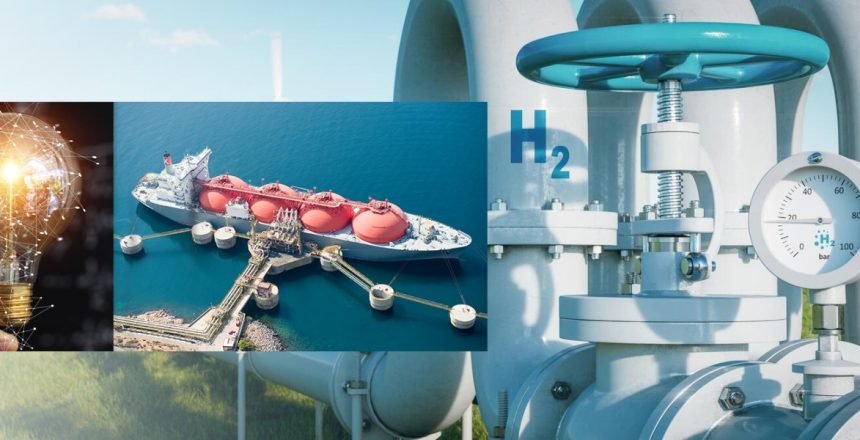
Energy transition and electrification of the economy are two closely interrelated terms. The energy transition of our economies (towards decarbonization) cannot occur without electrification, and electrification is the best way to achieve the energy transition.
Numerous studies have demonstrated that achieving a net-zero CO2 emissions economy within the next 30 years is technically and economically feasible . However, achieving this will require the use of a wide range of resources that can transform our energy systems: from cleaner methods of electricity production to the incorporation of energy efficiency and flexibility, the use of Industry 4.0 technologies, hydrogen, carbon capture and storage (CCUS) technologies, and more.
Electrifying the economy entails transforming all economic sectors toward the use of renewable or CO2-free energy sources. This proposal begins with electrification, that is, converting all energy uses and processes that currently rely on fossil fuels to electricity, where technologically and economically viable. In this way, these uses can quickly leverage the ongoing transformation of the electricity industry [1] . Applications or processes where direct electrification is not yet feasible, such as heavy and long-distance transport, steel production, and mining processes, among others, will have to rely on the use of other cleaner fuels or energy vectors such as natural gas, biofuels, hydrogen, and ammonia.
Although the transition to fully renewable systems is relatively advanced in the electricity industry, it is anticipated that these systems will continue to require firm and backup power from manageable resources to address and complement the intermittency of distributed, renewable, and variable energy resources. This firmness will have to come from clean production sources with storage and transportability attributes , such as natural gas, hydrogen, and ammonia, which position them as key energy vectors for decarbonization.
Currently, natural gas is an extremely important energy source for the global economy and, according to all decarbonization, energy transition and sustainability plans, natural gas has a central role in the path towards climate neutrality, while technologies of other sources and renewable fuels that can provide firmness are being developed.
Natural gas has powered the world for millennia [2] . Natural gas is the fossil fuel that generates the fewest greenhouse gases. Composed almost entirely of methane (CH4), it emits far less carbon dioxide (CO2) and air pollutants than other fossil fuels. Its versatility allows it to be used in a wide range of energy applications: from electricity generation to transportation, industrial processes, commercial and residential uses, and even the production of hydrogen and ammonia.
To better support decarbonization efforts , the natural gas industry has begun to look for ways to reduce or offset its carbon footprints, driving the emergence of a new product within the industry: Carbon-Neutral LNG (“Offset LNG”).
Since the carbon-neutral LNG market is still in its early stages, the number of global transactions remains limited. However, the industry anticipates that as standards for carbon offset certificates are developed, this product will gain liquidity and transparency, ensuring that natural gas maintains a relevant role in our energy future.
Hydrogen, on the other hand, is the other crucial energy vector for decarbonization and has been hailed as the ideal fuel of the future. It is the only fuel that emits only water during combustion. Its properties make it highly versatile, allowing it to be used directly or for the production of alternative fuels such as ammonia, methane, and synthetic fuels. It can also be blended with natural gas as a quick solution for emissions reduction. As a combustible gas, it can be used for the same purposes as any other combustible gas (natural gas, butane, etc.).
Over the last century, hydrogen has been widely used in the manufacture of chemical compounds, in oil refining processes, and in space applications. In the last ten years, the development of hydrogen technologies for mobility has led to the commercial availability of cars, buses, trucks, and, more recently, trains that use it as an energy source.
Since hydrogen is not found in its pure state in nature, it must be produced. Virtually all hydrogen currently produced comes from the use of fossil fuels , so its production process emits CO2. With the development of renewable energies and the use of CO2 capture/sequestration technologies and water electrolysis, a gradual transition is expected from gray hydrogen [3] (currently produced from natural gas and oil) to blue hydrogen (which uses CO2 capture technologies), and from blue hydrogen to green hydrogen (renewable).
Hydrogen from renewable sources plays a crucial role in the decarbonization of energy-intensive and emissions-intensive sectors such as high-temperature industry and transport.
One of the great advantages of green hydrogen is that, being obtained from the electrolysis of water molecules using renewable energy, it can be produced in almost every country , unlike fossil fuel production, which is concentrated in a few markets, thus changing the geography of global energy trade. The only limitations would be the availability of land, water, or the cost of renewable electricity, which, in certain countries or regions, could make importing this product from the international market attractive [4] .
Although green hydrogen is poised to become a key energy carrier in the decarbonization of the economy, the reality at present is that it is still an immature technology on a large scale, with low energy efficiency and limitations in production and transport. All of this contributes to its current high cost and means that its future widespread adoption still depends on resolving its technological uncertainties, primarily in its production and especially in its logistics and storage [5] .
In order to promote efficient decarbonization and foster the technological maturity of green hydrogen, industry efforts are being directed towards:
- Promote its technological development through R&D&I support
- Promote a decarbonization process in two phases :
- Short term: prioritize replacing non-green hydrogen used as a raw material in industry (ammonia, refining, chemical). This represents an existing demand for hydrogen that is difficult to replace and, in any case, will have to be decarbonized sooner or later.
- Medium and long term: As production costs are reduced and production becomes more competitive, decarbonize those sectors where there is no cheaper alternative, such as heavy or long-distance transport, or high-temperature industry.
Today, green hydrogen plays a fundamental role in the strategic and economic planning of numerous regions and countries . It is increasingly common to find governments, international agencies, and corporations discussing a “Hydrogen Economy” as the energy model that will completely replace the use of fossil fuels and provide long-term energy storage.
The widespread use of hydrogen as a fuel, while seemingly a more long-term prospect, could be accelerated by technological efforts underway worldwide. This decade will be crucial for the cost-effective development, demonstration, and large-scale deployment of these technologies.
Central America is destined to be one of the leading regions in the hydrogen economy and in the development of its international market, being the region with the cleanest electricity matrix on the planet, which also has an extraordinary endowment of natural resources (rivers, solar radiation, wind, geothermal, access to coast and availability of land).
For this to become a reality, our countries must prioritize in their energy policies the establishment of mechanisms that promote private investment and reduce risks in these types of technologies , facilitating permits, licenses and a flexible regulatory framework that allows “first movers” and our countries to be part of this global movement.
Of the countries in the region, Costa Rica is in the lead, with experience in hydrogen dating back to 2012 , when the local energy and space propulsion company Ad Astra Rocket Company and the Costa Rican Oil Refinery (RECOPE) started the so-called Hydrogen Ecosystem Project.
It currently has a project underway, supported by the Inter-American Development Bank, that aims to promote the use of hydrogen in mobility, as well as other initiatives that seek to expand its use in the economy in general.
Costa Rica is the only country with a draft Law for the Promotion and Implementation of a Green Hydrogen Economy, which is currently under review. This proposed law includes incentives for the next 15 years, such as exemptions from duties, taxes, and levies, both on imports and local purchases, as well as on end-use hydrogen.
The versatility of hydrogen as an energy vector allows each country to adapt its deployment strategy to its context and priorities , which represents a great opportunity for our markets to take advantage of their own strategic advantages, industrial value chains, technological capabilities and infrastructures.
This article was originally published in AmCham News on October 17, 2022.
[1] Currently, the electricity industry is responsible for only 20% to 30% of our economies’ primary energy consumption. The bulk of the energy consumed is non-electrical, so impacting emissions requires transforming the energy uses of other sectors such as transportation, the petrochemical industry, steelmaking, mining, among others, using cleaner energy sources.
[2] Long before people knew it was a fossil fuel, millions of years ago, they attributed supernatural powers to it and associated it with the world of magic and the supernatural. The Chinese were the first to use it for practical purposes, beginning its exploitation as early as 125 BC. Today, thanks to technological advances, mainly in its transportation, natural gas is considered the fuel of the 21st century, just as coal and oil were in the 19th and 20th centuries.
[3] The diversity of primary sources and processes in hydrogen production has led the industry to adopt a color scale to facilitate reference and guarantee its origin. Currently, only 1% of global hydrogen production is green and based on water electrolysis using renewable energy sources; most of the rest is produced using techniques that emit CO2, such as coal or natural gas (gray hydrogen).
[4] Due mainly to limitations on land, countries such as Germany, India, Italy, Japan and the Republic of Korea are expected to be net importers.
[5] This stems from the low volumetric density of hydrogen, which, even in liquid form, is only one-third that of liquid fuels such as LPG or LNG. An alternative that mitigates these drawbacks is to store and transport the molecules in other substances such as methane (CH4) or ammonia (NH3).