

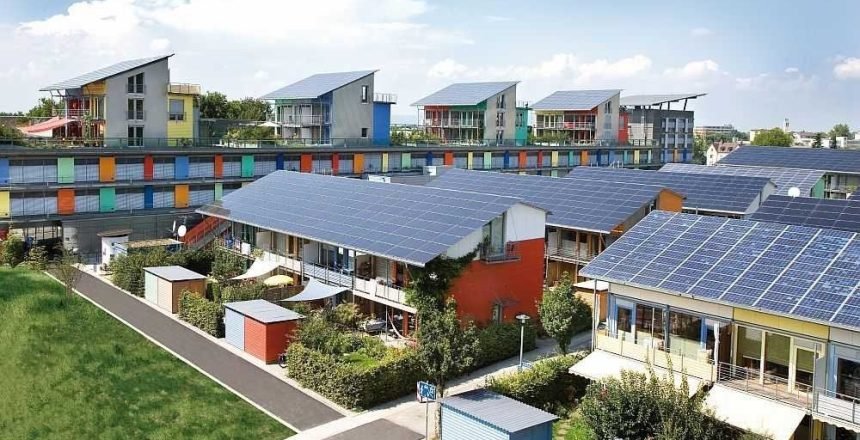
Today’s technological advancements are enabling electricity consumers to actively participate in the production of their own energy. A new figure in the electricity industry, known as the prosumer —an acronym derived from the words “producer” and “consumer”—has emerged.
The prosumer has the ability to leverage their self-consumption of electricity or the flexibility of their demand to consume energy independently of the grid, share it, store it, or feed it back into the system. All of this is thanks to new energy production and storage technologies (solar, batteries, microgenerators), and energy management technologies (remote meters, cloud computing, the Internet of Things, Artificial Intelligence, Blockchains) that are democratizing electricity service and enabling its decentralization.
Various approaches have been adopted in the global industry to regulate this concept. Generally speaking, self-consumption can be categorized into three groups:
1. Individual Self-Consumption: This refers to consumers who, in addition to consuming electricity, produce and store it on their premises, and may or may not sell any surplus to the grid. This is the oldest and most prevalent type of self-consumption in today’s markets .
As an alternative for users who do not have their own roofs to install self-production equipment such as solar panels—that is, those who live in apartment buildings or blocks—two variations of the self-consumption concept have been defined, allowing members of a group to share energy within or outside their locality. These variations are: Collective Self-Consumption and Energy Communities.
These definitions have emerged to facilitate the participation of all network users in the energy transition, and are the schemes being adopted in the new regulatory approaches of the industry.
2. Collective Self-Consumption: This refers to a group of consumers located in the same building or apartment block, or connected to nearby networks, who share an electricity generation facility within their perimeter for their own use, storage, and possible sale of surplus energy back to the grid. This type of self-consumption leverages economies of scale to develop solutions that benefit the community.
“Nearby” installations are defined as those connected to the internal network of associated consumers, either through direct lines or via connections to the “nearby network.” The concept of nearby networks allows for collective self-consumption within a building or group of buildings.
The simplest form of collective self-consumption is an installation that covers the energy needs of the building’s common areas , such as lighting for stairwells, landings, entrances, garages, and storage rooms, or powering the elevator. The possibilities expand when considering a residential complex with swimming pools and other common areas (patios, lounges, play and sports areas, etc.). In this case, it is a basic installation, and ownership belongs to the homeowners’ association, which is the sole user of the system.
From this initial option, others become available, such as the comprehensive , more complete, and higher-capacity installation, which can supply energy to both the apartments and any commercial premises in the building. In this case, which is particularly attractive for new construction, the owner is also the homeowners’ association, which is responsible for billing each individual resident.
A final case would be that of the flexible installation , which initially would only supply those neighbors who had decided to connect, although it would allow other neighbors to join later, making it an ideal type of installation for already built housing blocks.
In categories 1 and 2 described above, two types of self-consumption are distinguished:
WITHOUT surpluses . This occurs when “anti-islanding” systems prevent the injection of surplus energy into the transmission or distribution network. In these installations, technological development combines with the commercial progress of energy storage, allowing for better management of peak demand while reducing pressure on distribution networks. In this case, there is only one type of stakeholder: the consumer.
WITH surpluses . When generation facilities can, in addition to supplying energy for self-consumption, inject surplus energy into the transmission and distribution networks. In these cases, there are two types of entities: consumer and producer.
Self-consumption systems with surplus energy may or may not be eligible for pre-established compensation paid by electricity providers. Consumers can receive compensation for the value of the surplus energy on their bill or by selling this energy at the market price. Regardless of the option, self-consumption installations offer consumers significant savings on their electricity bills.
3. Energy Communities: This refers to a group of consumers who share an electricity generation facility for their use, storage, and potential sale of surplus energy to the grid. Energy Communities effectively involve community members in the development of renewable energy and energy efficiency projects, giving them opportunities to invest in these macro-trends.
These types of communities can be of different types:
a. Community-owned generation assets: This is currently the most common type of energy community found in modern systems. Members of these communities do not typically consume the energy themselves in order to sell it to a supplier. The revenue generated from this activity is shared among the members and/or reinvested in energy projects within the community.
b. Virtual sharing over the grid: These are energy communities that own and operate generation assets. They not only share profits but also the energy produced among their members. This type of exchange can be organized through a provider, who manages the matching of production and consumption and supplies additional energy if needed.
c. Sharing local production through community grids: This is a third level of integration for energy communities, which physically share local energy production through community grids. These communities have emerged in various contexts, such as energy networks on islands without mainland connections or in other remote locations. Energy communities unlock the potential for consumer flexibility through the management of shared consumption , enabling them to participate in grid flexibility services. However, providing these services also raises new risks, such as increased constraints on internal community networks and the risk that vulnerable consumers may be forced to provide flexibility they do not possess.
Finally, to promote and accelerate the development of these types of innovative schemes, energy policymakers and regulators are adopting various incentive mechanisms, which can be summarized as follows:
1. Compensation mechanisms for surpluses delivered to the network (e.g., “Feed-in Tariff”, “Net Metering”, “Net Billing”)
2. Tax Exemptions:
- In property taxes
- Associated with the importation of equipment linked to self-consumption
- Associated with constructions, facilities and works linked to self-consumption
- Corporate Income Tax and Income Tax
3. Low interest rates and access to credit
4. Facilitation and simplification of administrative procedures for small self-consumption installations (typically <30 kWp).
In the case of larger self-consumption installations, a benefit is usually included in the network access toll payments, as recognition of the savings in transport and distribution losses.