


The year 2026 will mark the beginning of the second half of the 2020s, with a global energy sector undergoing dynamic transformation. Following the post-pandemic recovery, the world faces a challenging context, with high geopolitical uncertainty at the international level that has placed energy security at the center of the debate.
Even so, the energy transition continues to gain traction: in 2025 , rapid growth in renewable energy and electrification was consolidated , accompanied by a growing concern for security and stability in energy supply .
While fossil fuels will remain the primary source of energy , 2025 saw new all-time highs in solar and wind power capacity worldwide. This demonstrates an energy system in the process of change, although still far from completely replacing fossil fuels.
GLOBAL ENERGY CONTEXT
By 2026, I anticipate the following trends as the most relevant in the global energy context:
1. Sustained growth of renewables and electrification
Renewable energy sources will continue to lead the growth of global electricity capacity. It is estimated that by 2025, global electricity generation will exceed 35% renewable share for the first time, thanks to the competitive costs of solar and wind power and the support of public policies.
By 2026, virtually all net increases in electricity capacity will come from renewables, solidifying clean electricity as the cornerstone of the energy system. This surge is accompanied by the electrification of end uses : for example, electric vehicle sales reached record levels in 2025 (around 14.7 million units so far this year, a 26% year-on-year increase), demonstrating how the transportation sector is accelerating its transition to electricity.
However, the sharp increase in global energy demand is keeping emissions high from sectors that are difficult to electrify, indicating that fossil fuels will continue to play a significant role in the short term.
2. Energy security and resilience
Recent events—large-scale blackouts, extreme weather, and renewed geopolitical tensions—have highlighted the vulnerability of energy systems, even in developed economies. Volatility in oil and gas markets, disruptions to strategic shipping routes, and increasing stress on electricity grids have returned energy security to the forefront of the global agenda. Today, the transition faces a clear trilemma: moving toward decarbonization without compromising affordability or reliability of supply.
Looking ahead to 2026, the priority will be strengthening electricity grids, protecting critical infrastructure, and deploying large-scale storage as backup capacity. Energy resilience will shift from a reactive approach to a proactive strategy based on infrastructure, data, and real-time response capabilities.
3. Diversification of strategic supplies and materials
The rapid expansion of renewable energy has reduced dependence on fossil fuels, but it has created a new resource vulnerability: critical minerals . Lithium, copper, nickel, and rare earth elements are essential for the transition, and today their supply chains are highly concentrated, especially in processing, exposing the system to geopolitical risks, bottlenecks, and cost pressures.
By 2026, strategic alliances and investments in key regions such as Latin America—particularly the Lithium Triangle and Chile—are expected to intensify, while efforts to expand transmission infrastructure to integrate more solar and wind energy are growing. At the same time, the recycling of strategic materials (Circular Economy) will begin to solidify as an energy and security policy, reducing external dependence and environmental impact. The transition will no longer depend solely on how much clean energy is produced, but rather on the resilience and diversification of the energy base that supports it .
4. Energy storage and energy flexibility
The massive integration of renewables has made the need for energy storage to guarantee a stable supply evident. The deployment of batteries (BESS systems) will accelerate in 2026, moving from an innovative option to an essential component of electricity grids.
Significant progress was already observed during 2025: in pioneering countries, large-scale battery projects were financed and installed, paving the way for a greater presence of storage systems coupled with solar and wind farms in 2026. This will allow for better use of available clean energy—reducing curtailment —and provide stability services (reserve, frequency control) to the grid.
In other words, energy storage is no longer optional ; it is becoming the solution for supplying energy during peak hours, mitigating renewable energy intermittency, and increasing the security of electricity supply, even in contexts of high renewable energy production. Growth is expected in new business models centered around batteries, such as stand-alone storage plants and hybrid systems (solar/wind farms with batteries), which will also drive more competitive costs.
5. Digitization and artificial intelligence in smart grids
The wave of digital transformation will continue to optimize the energy sector. By 2026, smart grids will evolve into even more automated and “cognitive” systems, capable of learning and adapting in real time to efficiently manage generation and demand.
Artificial intelligence (AI) has become a strategic ally for predicting consumption, optimizing energy flows, and detecting failures before they occur. For example, in Europe, these digital improvements are already expected to reduce power outages by up to 40% and allow for the integration of 15% more renewable energy without compromising grid stability. AI is also helping to better manage infrastructure maintenance (with predictive algorithms that analyze data from sensors and drones) and balance loads in microgrids and smart buildings.
In parallel, 2026 will also see the implementation of new technological regulations —such as the first regulations on AI and cybersecurity in energy systems—especially in regions like the European Union. This will ensure that this massive digitalization occurs with standards of transparency, security, and data protection . In short, the convergence of energy and artificial intelligence will make the system more efficient, secure, and sustainable , marking a qualitative leap in global energy management.
6. Sustainable fuels and other green innovations
Beyond electricity, 2026 will be marked by a push for low-emission fuels in sectors where electrification is complex. During 2025, attention grew on alternatives such as SAF (Sustainable Aviation Fuel) and green diesel, seen as essential for reducing emissions in aviation and heavy transport. While their production is still in its early stages and expensive, pilot projects, long-term agreements, and feasibility studies multiplied worldwide. This trend will intensify: governments and companies will seek efficient ways to scale up advanced biofuels (including biomethane, which has emerged as a promising option in transport and gas networks). At the same time, technological and regulatory advances are expected in carbon capture and industrial energy efficiency, along with the expansion of digital energy management in buildings and factories. All these initiatives aim to cut emissions in challenging sectors and complement electrification.
In short, 2026 will see a more diverse mix of solutions: from renewable energy dominating new installed capacity, to sustainable fuels and CO₂ capture projects gaining ground as part of the climate strategy.
LATIN AMERICAN ENERGY CONTEXT
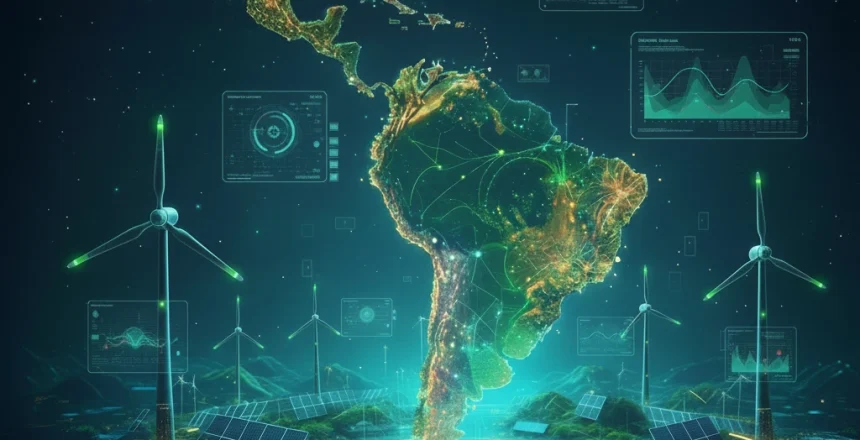
Latin America is poised to become a key player in the global energy transition by 2026. The region combines extraordinary renewable resource wealth (solar, wind, hydropower, biomass, and even geothermal potential) with a strong commitment from governments and businesses to decarbonization . This, coupled with evolving regulatory frameworks and growing interest from international investors, creates fertile ground for Latin America to accelerate its energy transformation in the coming years. Below, I highlight four trends that will shape 2026 in the Latin American context:
1. Sustained growth of renewable energies
Most Latin American countries are aggressively increasing the renewable energy generation capacity in their energy mixes. For the period 2022-2027, the IEA projects a 75% increase in global renewable capacity, and Latin America will contribute significantly to this growth with dozens of solar and wind projects under development. For example, countries like Colombia, Chile, Mexico, and Peru have launched policies and tenders to add new clean generation. Colombia expects a record number of new photovoltaic and wind farms connected to its grid in 2026, supported by measures such as expedited environmental permits for solar projects under 100 MW and residential solar panel programs in vulnerable communities. Chile , meanwhile, had a dynamic 2025 in which multiple solar projects with batteries reached financial close and entered construction, and it expects to maintain this pace of renewable expansion in 2026. Even countries with historically fossil fuel-based energy sources, such as Mexico , have regained momentum: the Ministry of Energy raised the clean energy generation target to 38% by 2030, predicting that the vast majority of new electricity projects between 2025 and 2030 will be solar or wind power .
In summary, Latin America will enter 2026 with a renewable energy boom underway, diversifying its sources beyond traditional hydroelectric power and injecting large volumes of green energy that bring the region closer to its climate commitments.
2. Energy storage takes center stage
Alongside renewable energy growth, Latin America recognizes that energy storage is critical to the success of the transition . Several countries are implementing grid-scale battery systems for the first time and adjusting their regulations to incorporate them. Chile illustrates this trend: after an initial boom in hybrid solar + battery projects in 2025, a diversification of players and financing for battery energy storage systems (BESS) is anticipated in 2026, with more developers able to achieve financial closures and banks offering more flexible debt structures for these projects. Furthermore, in 2026, Chile will update the regulations for small-scale distributed generation (PMGD) to integrate storage into their operations, establishing clear rules for remuneration and control for batteries connected to distribution networks. Peru will also take a leap forward in this area: legal changes recognizing battery storage as ancillary services to the electricity system will come into effect in January 2026 . This opens the door to the development of stand-alone battery projects in the country, something previously not legally possible, once specific regulations for their implementation are issued.
Why is all this so important?
Because batteries provide stability and reliability to the grid, regulating frequency and meeting peak demand, while also allowing for the integration of more intermittent renewables (solar, wind) without compromising service continuity. In areas with fragile or isolated grids, storage improves local energy security and reduces the need for fossil fuel backup.
In summary, 2026 will see storage cease to be a luxury and become an essential ally of clean energy in the region.
3. Regulatory evolution and new business models
To channel these investments, Latin American countries must modernize their regulatory frameworks . In Mexico , the Ministry of Energy (SENER) presented a 15-year Electricity Development Plan that combines public and private investment and confirms that 96% of new private projects between now and 2030 will be wind or solar , emphasizing the importance of energy storage to balance the grid. In Colombia , initiatives such as energy communities and remote distributed generation have been created , and firm energy and reliability auctions continue to ensure backup for the renewable energy mix. Chile is adjusting regulations for its electricity tenders; in fact, it plans to award supply contracts for approximately 1,300 GWh/year starting in 2029, a key step in channeling the abundant renewable energy supply through stable, long-term contracts. And Peru updated its laws in early 2025 to reduce barriers to clean energy generation and promote competition—for example, it amended its Electricity Generation Law to facilitate diversification and lower tariffs.
Contracts such as financial or virtual PPAs are also gaining traction in the region . These allow renewable energy projects to secure revenue by selling energy indirectly (without physical delivery), protecting investors from price volatility. Although still in their early stages, these innovative contracts are generating interest because they offer flexibility and adapt to frameworks where traditional PPAs face limitations (for example, when regulations do not recognize firm capacity for solar/wind power).
In short, by 2026 Latin America will need to adjust its “rules of the game” to make the transition viable : more renewable-friendly laws, specific regulations for batteries, incentives for private investment, and modern financial tools to attract capital to clean energy. All of this points to an ecosystem where sustainable projects become increasingly bankable and scalable in the region.
4. Challenges in infrastructure and financing
Despite the promising outlook, Latin America’s energy transition by 2026 is not without significant challenges. One of these is the lag in grid infrastructure : transmission and distribution capacity sometimes does not grow at the same pace as renewable projects, which is already causing bottlenecks. In Chile , for example, the northern region suffers from congestion and spillover of solar/wind energy; although grid expansion projects will advance in 2026, no immediate definitive solutions are expected, so energy storage will help partially mitigate the problem. Similarly, several countries face delays in the construction of new lines and substations, as well as challenges in carrying out prior consultations and obtaining environmental permits for projects on time—critical elements for developing renewable energy parks and transmission lines in the region.
Another challenge is ensuring regulatory and financial stability : abrupt political or regulatory changes can sow uncertainty among investors. Colombia itself , which has consolidated a solid renewable energy framework in recent years, is debating potential reforms to its public services regime, generating concern until their scope is defined. Likewise, ensuring accessible financing is key: although the appetite of banks and investors is growing (Latin America is attracting increasing amounts of green institutional capital ), projects must overcome high local interest rates and country risks. To achieve its goals, the region must strengthen investor confidence with stable policies; recovering investment is crucial for sustainable development in this second half of the decade.
Finally, there is the challenge of social sustainability : ensuring that the transition benefits local communities, with projects that respect the environment and generate jobs, while avoiding social opposition. The good news is that many of these challenges have been identified and are being addressed. Integrated planning (e.g., synchronizing renewable energy expansion with grid infrastructure projects), the creation of climate funds, and regional cooperation (sharing best regulatory practices, integrating electricity markets) will be part of the solution in 2026 and beyond .
CONCLUSION
2026 will be a year of consolidation and adjustments in both the global and Latin American energy sectors. Globally, we will witness the convergence of transformative forces—more renewables, more storage, more digitalization, and new sustainable solutions—which, along with a focus on energy security, are redefining how we obtain and use energy.
Latin America, for its part, will establish itself as a key player in this transformation, leveraging its natural advantages and addressing structural shortcomings to drive a cleaner, more resilient, and more accessible energy future . The path is not without obstacles, but trends clearly indicate that the energy of the future will be renewable and smart , and by 2026 we will be taking firm steps in that direction both globally and in our region.
References
Global energy in 2026 will be marked by growth, resilience and competition https://www.weforum.org/stories/2025/12/global-energy-2026-growth-resilience-and-competition/#:~:text=Geopolitical%20tensions%20put%20energy%20security,cobalt%2C%20nickel%20and%20rare%20earths