


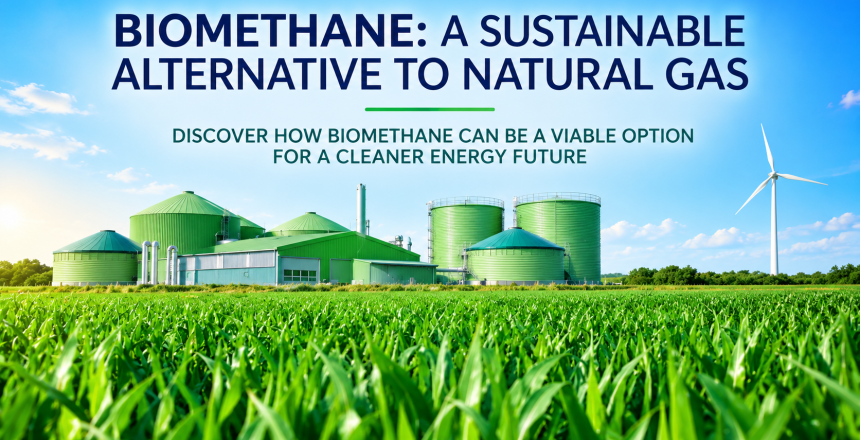
As the world faces the challenge of reducing its carbon footprint, the need for clean and renewable energy sources is becoming increasingly urgent. In this context, biomethane, produced from biomass, emerges as a promising alternative for advancing decarbonization and supporting the circular economy. This renewable and sustainable gas not only reduces emissions but can also replace conventional natural gas in multiple applications, thus driving a greener energy transition.
In this article, we will explore how biomethane can establish itself as an essential component in the global energy mix and play a strategic role in the transition to a low-carbon future.
What is Biomethane?
Biomethane is a renewable gas produced from the decomposition of organic waste, such as agricultural waste, food scraps, and industrial waste. Its production process involves the anaerobic digestion of this waste or the processing of synthesis gas generated during its gasification, producing biogas that is then purified to remove impurities and increase its methane content, resulting in a gas similar in composition to conventional natural gas.
When we talk about biomethane, we are referring to biogas of sufficient quality to be introduced into the gas system. Biomethane has a methane concentration of over 90%, while in biogas this concentration ranges from 45% to 75%.
Like natural gas, biomethane can be used in a wide range of applications, from electricity generation and heating to transportation and industry. This allows it to be injected directly into existing natural gas networks, simplifying its integration and maximizing its positive impact.
Advantages of Biomethane over Natural Gas
- Carbon Emission Reduction: By producing biomethane from waste, the emission of methane into the atmosphere is avoided. Methane is a greenhouse gas 25 times more potent than CO₂ in terms of global warming. Furthermore, its combustion emits less carbon dioxide compared to fossil natural gas, making it a nearly carbon-neutral fuel.
- Circular Economy: Biomethane production promotes the circular economy by reusing waste that would otherwise be discarded. This not only helps manage waste more sustainably but also generates added value in the form of renewable energy and organic fertilizers as byproducts of the process.
- Energy Independence: The resources needed to produce biomethane are available almost anywhere, allowing countries and regions to depend less on fossil fuel imports and improve their energy security.
- Compatibility with Existing Infrastructure: Since biomethane has a chemical composition similar to natural gas, it can be stored and transported in natural gas networks without significant modifications. This reduces implementation costs and facilitates its large-scale adoption.
- Versatility of Applications: Biomethane not only replaces natural gas in industrial and domestic applications, but also has the potential to power heavy transport vehicles, a sector where electrification can be complex and costly. The possibility of injecting biomethane into gas networks and using it in natural gas vehicle refueling stations expands its applicability, reducing emissions in freight transport and thus contributing to sustainable mobility.
Raw Materials for Production
A wide variety of raw materials can be used in biomethane production. Most of this gas is obtained from biogas refining, so it shares the same raw material sources. However, it is also possible to produce biomethane from woody biomass, which includes forest residues and wood processing byproducts. Generally, these raw materials are grouped into four main categories:

- Crop residues : These include leftover crops such as wheat, corn, rice, sugar beets, sugarcane, soybeans, and other oilseeds. They also encompass intercropping, which is grown between two main crops to improve soil health.
- Animal manure : From livestock, such as cows, pigs, poultry, and sheep.
- Organic fraction of municipal solid waste (MSW) : Includes food waste, leaves, grass, paper, cardboard, and wood that are not recycled. It also includes certain industrial waste from the food industry.
- Sewage sludge : Semi-solid organic matter recovered from the treatment of municipal wastewater.
Using waste as a raw material not only avoids land-use problems that can arise with energy crops, but also allows the capture of methane that would otherwise be released into the atmosphere during the decomposition process.
Challenges and Considerations
While biomethane presents great potential, its large-scale adoption faces several challenges. In addition to production costs and raw material availability, issues such as competition with other biomass uses, the logistics of collecting and transporting organic waste, and the need to guarantee the quality of biomethane injected into gas networks must be addressed. Furthermore, the implementation of biomethane projects requires a clear and stable regulatory framework, as well as the active participation of public and private stakeholders.
- Production Costs: Biomethane production remains more expensive than fossil natural gas extraction, primarily due to the investment in technology and infrastructure required for anaerobic digestion and biogas purification. Although technology has advanced, the profitability of biomethane still relies heavily on government incentives, subsidies, and support policies to offset these costs. Without an adequate economic incentive framework, many biomethane projects could prove financially unviable, limiting their expansion.
- Availability and Competition in Biomass Use: The raw material for biomethane production comes from organic waste, such as agricultural, food, and industrial waste. However, these same materials are required in other applications, such as the production of biofuels, organic fertilizers, or composting processes. This creates competition in biomass use that can affect both the availability and cost of these resources. For biomethane to be sustainable, it is essential to optimize the waste supply chain and coordinate its use across various applications in a balanced way.
- Logistics for the Collection and Transportation of Organic Waste: Biomethane production requires complex logistics for the collection, storage, and transportation of organic waste. This can be challenging, especially in rural or remote areas where transportation infrastructure is limited. The variability in the quantity and quality of available organic waste also adds complexity, as it can affect the efficiency and costs of the production process. To address this challenge, it is necessary to develop efficient transportation infrastructure and establish processing centers that can minimize transportation distances and associated costs.
- Quality Assurance for Biomethane Injected into Gas Networks: Biomethane must meet specific quality standards before being injected into natural gas networks, as any impurities or variations in composition could affect the safety and performance of gas transportation and distribution systems. Purifying biogas to produce high-quality biomethane requires investment in additional technology and processes. Furthermore, ensuring consistent quality demands clear regulations and continuous monitoring to guarantee that the biomethane meets the necessary requirements at all injection points.
- Regulatory Challenges: The successful implementation of biomethane projects depends on a clear and stable regulatory framework that establishes incentives, standards, and support mechanisms for its production and marketing. However, in many countries, policies to support biomethane production and consumption are nonexistent or limited, discouraging investment.
Featured Use Case: Agri-food Industry

Biomethane offers significant opportunities in industries such as agri-food, due to the large volume of organic waste, such as manure and crop residues, which can be transformed into valuable resources. Not only can these industries significantly reduce their methane emissions, a potent greenhouse gas, but this purified biogas can also be used as fuel for agricultural machinery, power heating systems, and generate clean electricity to power their own operations and even sell surplus energy back to the grid. Furthermore, the digestate resulting from the anaerobic digestion process can be used as an organic fertilizer, improving soil fertility and reducing reliance on chemical fertilizers.
Agri-food cooperatives, which bring together farmers and livestock breeders, are particularly well-suited to benefit from biomethane production. By implementing joint biomethane projects, these cooperatives can optimize costs, generate new revenue streams, and foster innovation in the sector. Furthermore, by sharing resources and accessing advanced technologies, collaboration among farmers is strengthened, creating a more resilient and sustainable community. In this way, biomethane emerges as a comprehensive solution that not only addresses waste management but also supports the local economy and agricultural sustainability.
The Future of Biomethane in the Energy Transition
Biomethane is emerging as a crucial component in the transition to a sustainable and decarbonized energy future. Its ability to replace natural gas in energy-intensive applications, such as heavy freight transport and certain industrial processes, makes it an essential ally in sectors where electrification is complex and costly.
As biomethane is integrated into natural gas networks, it allows cities and communities to gradually transition to cleaner energy sources. This integration leverages existing infrastructure, minimizing the necessary investments and optimizing the use of current resources.
To maximize its impact, it is vital to establish policies that promote the production and use of biomethane, as well as economic incentives that facilitate the adoption of clean technologies. With a clear regulatory framework and adequate financial support, biomethane can play a fundamental role in diversifying the energy mix, contributing to energy security and resilience in a world facing increasingly urgent environmental challenges.
In conclusion, biomethane not only represents a viable alternative for reducing greenhouse gas emissions, but it is also a catalyst for the circular economy and sustainability. With proper attention and support, biomethane can be a cornerstone in the transition to a cleaner and more sustainable energy future.
References
An introduction to biogas and biomethane
The potential of biomethane in the agricultural sector: a view from cooperativism