


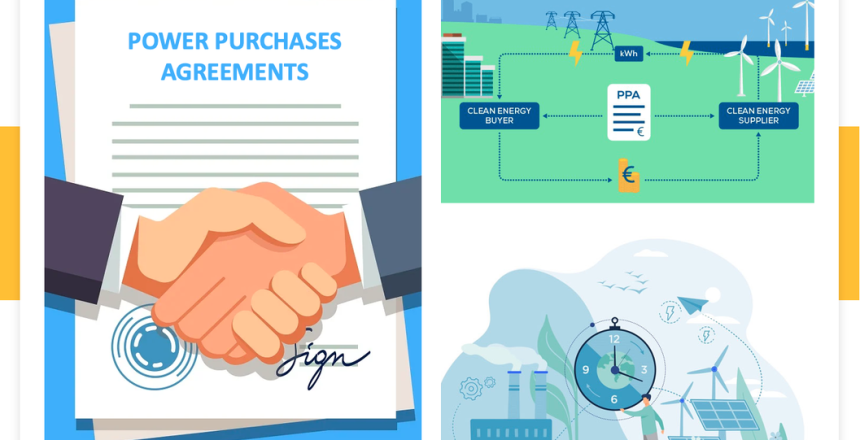
In this context of the Energy Transition, Electricity Supply Contracts, or Power Purchase Agreements (PPAs), stand out as essential tools to reconfigure the modern electricity industry towards a cleaner and more sustainable energy mix.
These agreements, which arise between a producer (generator) and a consumer, or also with electricity distribution or marketing companies acting as intermediaries, have been present in the industry since its inception. Although PPAs may seem like a novel concept to some, they have been responsible for the composition and evolution of the energy mix in our markets from then until now.
In this article, we will explore the evolution and importance of this risk hedging instrument in our industry, examining its origin, influence, and impact on the transition to a greener energy future.
Evolution of the Concept
In the late 19th century, when electricity was first introduced into our lives, early consumers typically paid a fixed fee for a specific number of light bulbs. This type of arrangement marked the beginning of the first form of electricity service contracts, which would forever change the way we live and work.
As electrification progressed with the development of supply networks and the interconnection of power plants, the role of electricity utilities emerged. These companies were tasked with generating electricity and operating the networks to supply it to consumers. Alongside their creation, the first large-scale supply contracts were developed. These contracts allowed utilities to receive fixed and variable revenues, guaranteeing them the financing of their projects and enabling them to plan their activities across the electricity value chain effectively.
These contracts included specific terms on the amount of energy purchased, consumption rates, and the duration of the agreement, providing stability to both generators and consumers in terms of revenue and costs.
With electricity becoming established as an essential public service, regulatory bodies began to intervene to ensure equitable and fair access to electricity for all citizens. In many countries, regulatory commissions were established to oversee and regulate electricity tariffs and contracts. This government intervention introduced additional levels of standardization and transparency in contracts, guaranteeing consumer protection against unfair business practices and ensuring the efficiency and reliability of electricity services.
With the reforms to the electricity industry and the creation of wholesale electricity markets in the 1990s, electricity producers found new ways to trade electricity, following market mechanisms similar to those used in other competitive industries. This led to the introduction of wholesale electricity markets, comprised of spot markets and bilateral contract markets.
With the new wholesale electricity markets, operational and investment risk was transferred to electricity producers with the aim of fostering innovation and efficiency in the industry. Although a wholesale electricity market could function solely through spot market transactions, the inherent volatility of this market, due to various factors including frequent changes in production costs, fluctuations in commodity prices, variations in demand, weather conditions, and regulatory changes, among others, has ensured that bilateral contract markets continue to play a fundamental role as risk management tools for market participants.
Spot electricity markets have been recognized as one of the most volatile markets in the world, so electricity producers and consumers require the use of bilateral contract markets to reduce their uncertainty.

Additionally, even when a spot market is well-organized and offers sufficient guarantees from participating agents, financial institutions prefer infrastructure projects with stable revenues backed by identifiable and financially sound buyers. PPAs, by establishing prices for predetermined periods, provide stability to producer revenues and stability to consumer costs, facilitating investment decisions for both parties. When these contracts are financial in nature, they also eliminate any incentive for price manipulation in the spot market by any of the agents.
Power Purchase Agreements (PPAs) are characterized by defining all the terms of the electricity sale. The contract will stipulate when the operation will begin, the electricity delivery deadlines, and payment terms, among other things.
Thus, PPAs have become the primary tool for producers and consumers to manage risk in the industry, including price, volume, regulatory, financial, and credit risks. In liberalized markets, PPAs have become the predominant transactions in the wholesale electricity market, contributing significantly to the stability and reliability of the electricity sector as a whole.
Types of Electricity Supply Contracts
In the wholesale electricity market, PPAs can take various forms. These can vary depending on the customer’s needs and the specific conditions of the electricity market in which they operate. Generally, there are four standard types of contracts in the industry: (1) Load Curve, (2) Demand Tracking, (3) Fixed Blocks, and (4) Supplier Production Curve . The table and illustration below present the main characteristics and differences between these types of products.


The choice of electricity supply contract depends on the customer’s specific needs, their ability to manage demand, and their risk and cost tolerance. Furthermore, the availability of these contracts can vary depending on electricity market regulations in each region.
The Renewable Supply Contract Revolution
Until about 15 years ago, this type of contract was still somewhat marginal. However, the significant drop in costs associated with renewable energy sources, especially solar and wind, along with growing public and private concern about climate change, and the implementation of government policies promoting the use of clean energy, have made Renewable PPAs one of the main drivers of the global development of clean technologies.
According to BloombergNEF ’s latest 1H 2023 Corporate Energy Market Outlook , in 2022, companies worldwide set a record by acquiring an unprecedented amount of clean energy through PPAs (Figure 1). In total, 37 gigawatts (GW) of renewable energy contracts were signed by more than 167 corporations, including Amazon (11 GW), Meta (2.6 GW), Google (1.6 GW), and Microsoft (1.3 GW), which announced power purchase agreements (PPAs) in 36 markets around the world (Figure 2). In total, corporations have signed PPAs for 148 GW of clean energy since 2008, more than the total power generation capacity of France.


The list of organizations committed to powering their operations with clean energy continues to grow. In 2022, 56 new companies joined the RE100 program , pledging to achieve 100% clean energy consumption in the near future. To date, the 397 RE100 members have purchased an estimated 249 terawatt-hours (TWh) of clean electricity, but an additional 290 TWh will be needed by 2030 to meet their targets, according to BloombergNEF projections. For companies like Google and Microsoft, which have committed to meeting their energy needs with carbon-free power around the clock, the demand is expected to be even greater.
According to a BloombergNEF study, companies that have committed to RE100 are investing more in clean energy than companies that have not.
Main Benefits of Renewable PPAs
- They allow the renewable energy developer to make an investment decision based on profitability vs. risk criteria and/or obtain the necessary financing to execute the project.
- They guarantee consumers a stable and competitive energy price.
- It guarantees the origin, traceability and additionality of the renewable supply, helping companies to meet their sustainability goals.
- It improves the reputation of companies.
- They help with regulatory compliance. Many countries and regions have specific targets and regulations related to the use of renewable energy. Renewable PPAs help companies meet these legal and regulatory requirements, avoiding potential sanctions or penalties.
Renewable PPAs 24/7
One of the most significant challenges presented by the energy transition is how to ensure a constant supply of clean energy to meet demand 24/7. The inherent variability of solar and wind energy has posed a particular challenge in this regard, as the production of these energy sources depends on unpredictable weather conditions.
Until recently, the response had been to supplement renewable energy with conventional energy sources, such as natural gas or coal, to cover periods when clean energy production is insufficient. However, this strategy runs counter to emissions reduction targets and the transition to a more sustainable energy mix.
In response to this challenge, 24/7 Renewable PPAs are emerging as a promising solution that seeks to eliminate the need for fossil fuels and optimize the use of renewable energy. These contracts aim to ensure a continuous supply of clean energy, day and night, aligning energy production with demand more precisely than conventional PPAs.
The first contract of this kind was announced by The AES Corporation and Google with the goal of operating their data centers and offices worldwide with carbon-free energy, every hour, every day, by 2030. Subsequently, other companies such as Microsoft and Iron Mountain gradually followed suit.
One of the key aspects of 24/7 Renewable PPAs is the combination of multiple renewable energy sources. This involves integrating technologies such as solar, wind, and hydroelectric power, and in some cases, energy storage systems like batteries. By leveraging a variety of renewable sources, dependence on weather conditions is reduced, and a constant flow of energy is ensured.
Furthermore, these contracts incorporate advanced energy management and data analytics technologies to predict and optimize energy production in real time. This allows for adjusting energy generation according to variations in demand and weather conditions, thereby maximizing the use of renewable energy and minimizing the need for conventional energy.
Conclusion
In summary, Power Purchase Agreements (PPAs) are fundamental components of the complex machinery of the modern electricity industry. As we move towards a future more focused on renewable energy and decarbonization, these agreements will continue to play a crucial role. The transition to a more sustainable energy mix will require even more flexible and innovative agreements that allow for the integration of intermittent energy sources, such as solar and wind power.
Electricity Supply Contracts, in their constant evolution, will not only guarantee the reliability of the electricity supply, but will also contribute significantly to the fight against climate change by facilitating the transition to cleaner and more sustainable energy sources.
As tools that unite generators and consumers in a joint effort towards a greener energy future, these contracts represent a vital part of the solution to achieve our environmental goals and ensure a reliable energy supply for future generations.